
Criminal Cases in Wilkes County Courts
Wilkes County Superior Court, part of the Toombs Judicial Circuit, is the felony trial court. Local clerk materials also schedule misdemeanor trial terms because the official court listings reviewed do not show a separate Wilkes State Court. That local arrangement makes the Superior Court clerk an important first stop for both felony files and many misdemeanor prosecutions. Magistrate Court handles warrants, preliminary matters, and county ordinance issues. Probate Court handles authorized traffic cases, while Washington and Tignall keep their own municipal traffic and ordinance dockets.
Each office holds only its own part of the record. A warrant or first-appearance entry at Magistrate Court is not the same as a Superior Court prosecution. Likewise, a city citation does not become searchable merely because PeachCourt routes Wilkes Superior Court records. Start with the court named on the notice, bond paper, citation, or charging document. If that is unknown, the arresting agency or Superior Court clerk may help identify the venue without promising that every record sits in one database.
Wilkes County PeachCourt Access
The Georgia Courts E-Access directory routes Wilkes County Superior Court users to PeachCourt. The directory is the official routing source, not a statewide case database. PeachCourt requires an account, and anonymous inspection of its Wilkes search screen was blocked during research. For that reason, no unverified claim about search fields, date coverage, result columns, or free access belongs in a Wilkes County court search.
The official directory image below shows why the provider route should be checked before relying on a familiar statewide search pattern.
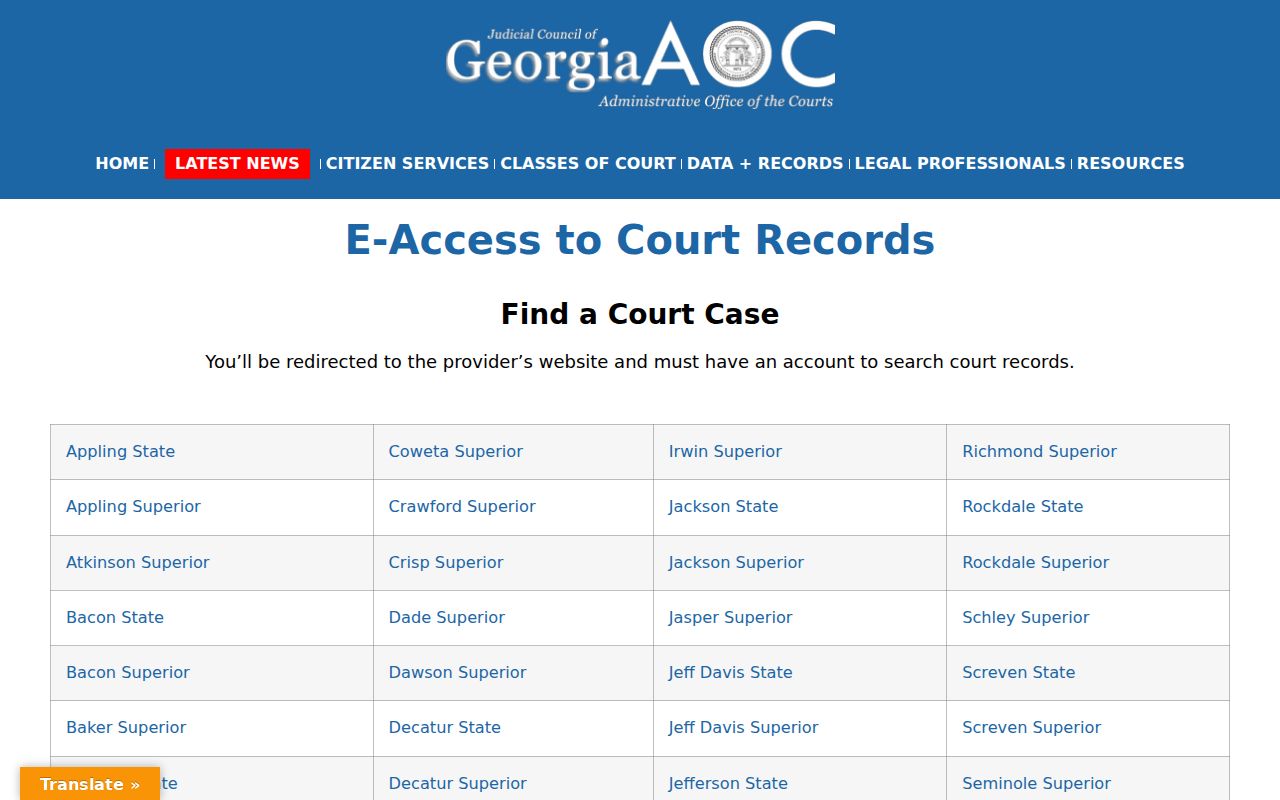
Its practical lesson is simple: confirm the court and provider first, then move to the Wilkes County clerk if the account gate or coverage prevents a useful result.
| Search element | Verified status | Best fallback |
|---|---|---|
| Wilkes Superior provider | PeachCourt | Use the official E-Access link |
| Account | Required | Ask the clerk for counter, phone, or copy options |
| Public field list | Not verified | Supply a name, year, and case number if known |
| Coverage and fees | Not published in the inspected local sources | Confirm before ordering |
How to Search Case Records
A careful Wilkes County criminal case search uses both the designated vendor and the courthouse custodian. Search results may lag behind a new arrest, use a formal charging name that differs from booking language, or omit a lower-court matter. The clerk is the source for a plain or certified copy, but Wilkes County did not publish copy, certification, archive-retrieval, or search-time prices in the material reviewed.
- Identify the court from the citation, warrant paperwork, bond form, or known case stage.
- For Wilkes Superior Court, follow the official E-Access directory to PeachCourt and create the required account.
- Use the exact case number when available. Otherwise prepare the full name, approximate filing or arrest year, and case type.
- Read the docket as a sequence. Distinguish a filing, hearing, continuance, plea, judgment, and final disposition.
- Call or visit the clerk for a missing case, a complete file, or a plain or certified copy, and ask about cost first.
Wilkes County Clerk Room 301
The courthouse fallback is the Superior Court Clerk at 23 Court Street, Room 301, Washington, Georgia 30673. The office lists 706-678-2423, fax 706-678-2115, and weekday hours from 8 a.m. to 5 p.m. The Judicial Division files and retrieves criminal cases, prepares calendars, records verdicts and sentences, handles appeals, and reports final dispositions to the Georgia Crime Information Center.
The PeachCourt account page is useful for remote access, but the clerk remains the custodian when the provider is not enough.
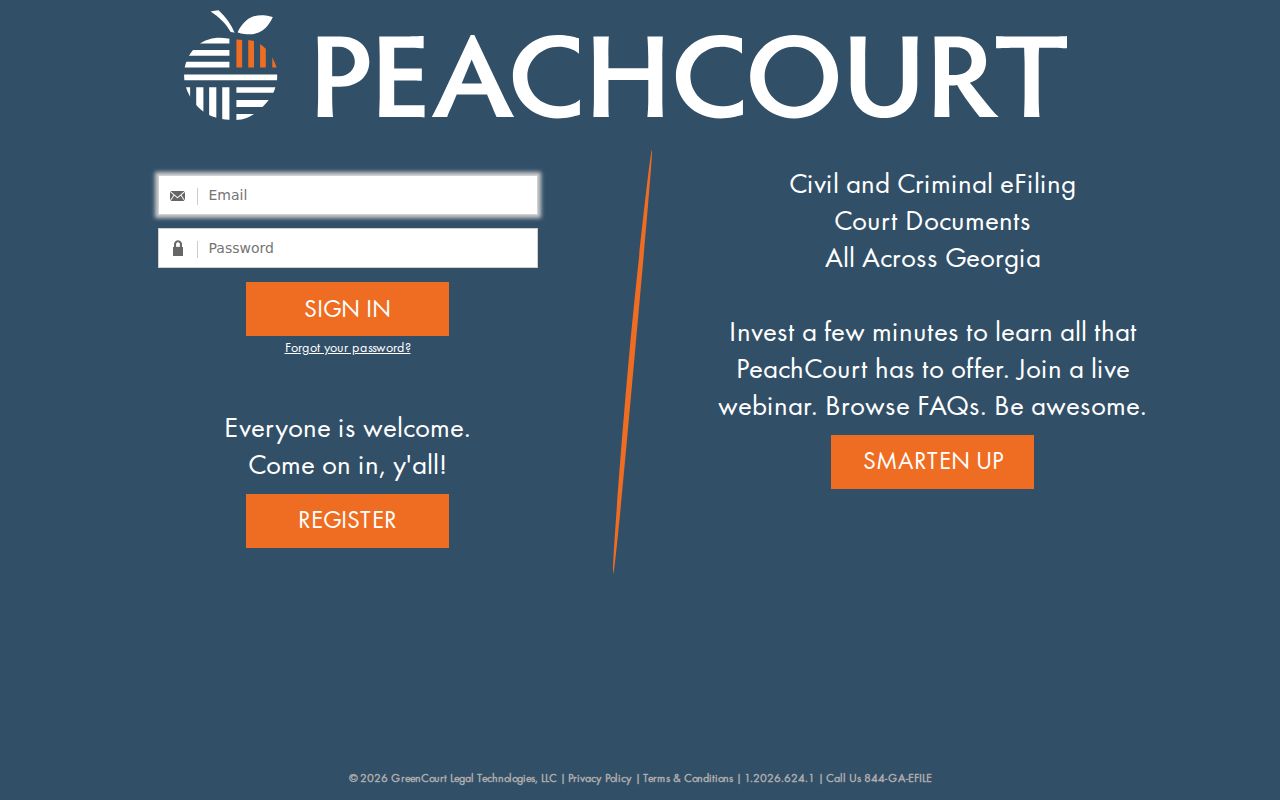
This account gate explains why a phone, fax, or counter request remains part of the complete Wilkes County case-record route.
Superior Court Clerk
23 Court Street, Room 301
Washington, GA 30673
706-678-2423
Fax: 706-678-2115
Monday through Friday, 8 a.m. to 5 p.m.
What the Case File Shows
A Wilkes County criminal case file records what happened after an accusation or indictment reached court. It is broader than a felony-verification result and different from the sheriff's incident or booking file. Readers seeking the actual outcome should look for the judgment or disposition, not infer it from the first charge or from the last visible hearing entry.
| Case number and court | Identifies the docket and the court with custody of the filed prosecution. |
|---|---|
| Charging document | An accusation or indictment states the formal counts accepted for prosecution. |
| Docket entries | Chronological filings, service, motions, notices, hearings, and court actions. |
| Hearing dates | Calendared arraignment, pretrial, plea, trial, sentencing, or review events. |
| Disposition and judgment | The result, such as conviction, acquittal, dismissal, nolle prosequi, or another recorded outcome. |
| Sentence and conditions | Custody, probation, restitution, concurrent or consecutive terms, and other ordered conditions when applicable. |
A sealed item, juvenile matter, victim identifier, or security-sensitive record may be withheld or redacted under applicable law. An online summary can also show less than the courthouse file.
Wilkes County Trial Court Boundaries
Court boundaries prevent costly wrong-office searches. Superior Court handles felony trials and, under the local materials reviewed, schedules misdemeanor trial terms. Magistrate Court can answer venue questions about warrants, preliminary steps, and county ordinances at 23 Court Street, 706-678-1881. Probate Court handles its authorized traffic work from Room 422 at the same courthouse, 706-678-2523. Its weekday hours are 8 a.m. to 5 p.m.
Washington Municipal Court handles city ordinance and misdemeanor traffic matters at City Hall. Tignall Municipal Court uses phone, fax, email, mail, and limited counter channels, with no verified portal. Rayle had no municipal court in the official listings reviewed. These distinctions do not mean a record is absent. They mean the searcher must match the event and charge to the office that created the docket.
Stages of a Criminal Case
A Wilkes County prosecution often begins after arrest and first appearance, followed by prosecutor review. The district attorney may use an accusation or present a felony charge to a grand jury. At arraignment, the accused answers the formal charge. Discovery and motions come before a plea or trial. The clerk then records the disposition and sentence and transmits the final result to GCIC. No local source supports a fixed time for each step, so a calendar date should never be treated as a promised completion date.
Case flow: Charges Filed › Arraignment › Pretrial › Plea or Trial › Disposition › Sentencing
Wilkes County Disposition Terms
Similar-looking labels can carry very different results. A “nolle prosequi” means the prosecutor declined further prosecution at that point. A “dead docket” places a case in inactive status and is not an acquittal. A “no bill” means the grand jury declined the charge presented. An acquittal is a not-guilty result after trial. First Offender treatment is a distinct Georgia mechanism that may end in discharge if its terms are met.
- Accusation
- A prosecutor's charging instrument used in eligible Georgia cases.
- Indictment or true bill
- A grand jury's formal charge.
- Disposition
- The recorded outcome of a charge or case.
- OTN
- The 11-digit tracking number assigned after successful fingerprint transmission.
- Record restriction
- A limit on dissemination, not destruction of the underlying record.
Wilkes County Cases Reach GCIC
The clerk's final-disposition work is the bridge between the local docket and Georgia's central criminal-history repository. GCIC uses the Offender Based Tracking System to connect fingerprint-linked arrests with later court outcomes. That connection can fail when fingerprints were rejected, the wrong OTN was used, or a disposition has not yet been sent or linked.
The Georgia Crime Information Center image below identifies the central repository that receives these reported results.
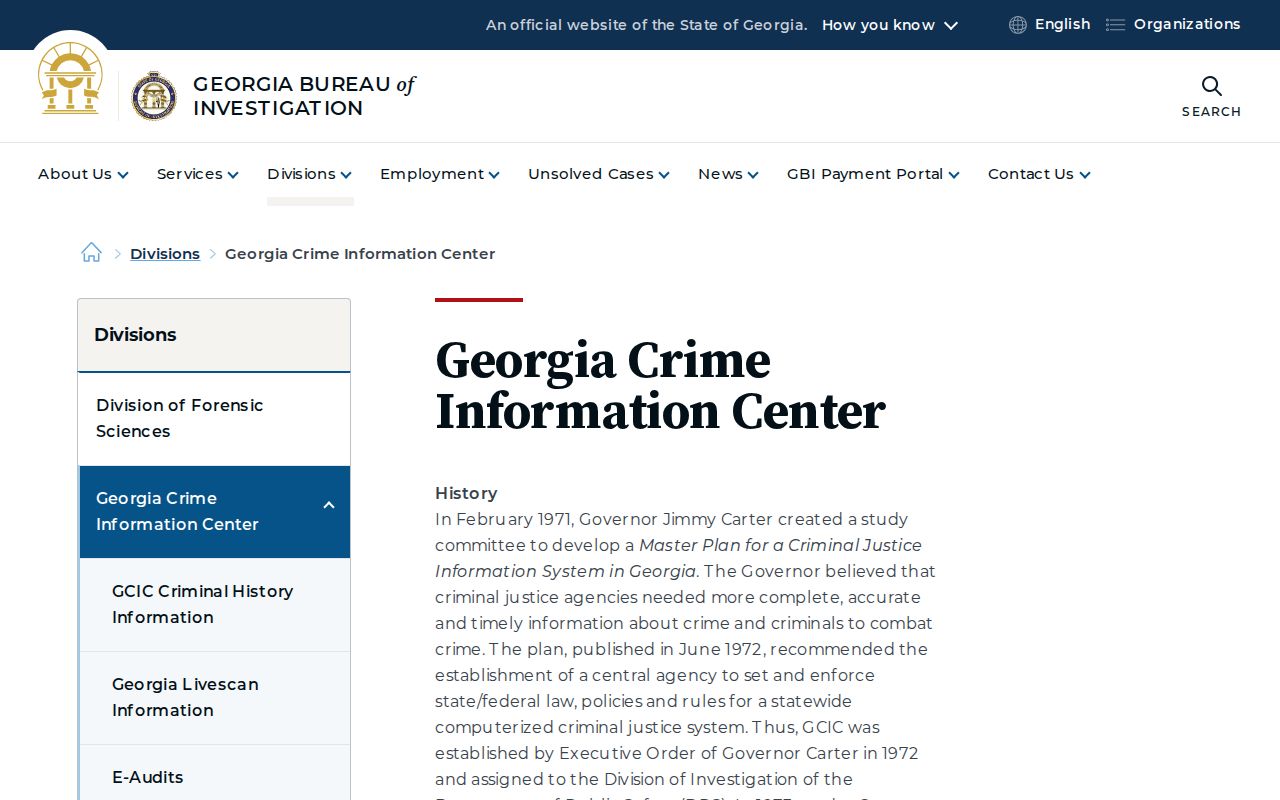
A GCIC gap therefore calls for comparison with the Wilkes County judgment and supporting documents. It does not justify changing the court result based on a portal assumption.
Access and Restrictions
The Georgia Open Records Act, O.C.G.A. §50-18-70 et seq., generally provides access to existing public agency records unless an exemption applies. It does not require an office to create a new custom report. Court files may also contain sealed material, juvenile information, protected victim details, or other content that is not released in a public copy. Record restriction under O.C.G.A. §35-3-37 affects dissemination and may involve separate court sealing. It does not erase every justice-agency copy.
Online access and courthouse access may show different levels of detail. A docket index can establish that an event was entered without providing the motion, order, transcript, or evidence behind it. Ask the Wilkes County clerk whether the sought document is public, whether it is available remotely, and whether a plain or certified copy is needed. Certification verifies the copy as an official court record, but Wilkes County has not published the related price in the sources reviewed. A requester should obtain a cost estimate before authorizing archive retrieval or extensive copying.
When a Wilkes County case is missing online, provide the clerk with a case number or full name, approximate year, and case type. Ask whether the office holds a docket, calendar, judgment, sentence, plain copy, certified copy, or archived file. For the broader path from an arrest entry to the formal filed charges, use the Wilkes County arrest history resource as a separate record layer.